From Monorail to Flyovers: Five Major MMRDA Projects Set to Open Across Mumbai
MMRDA Gears Up for Major Infrastructure Rollout
Mumbai commuters could soon benefit from a series of long-awaited infrastructure upgrades as the Mumbai Metropolitan Region Development Authority (MMRDA) prepares to open five major projects in a coordinated rollout. The projects span public transport, road connectivity, and urban infrastructure, reflecting the authority's broader effort to improve mobility across the Mumbai Metropolitan Region.
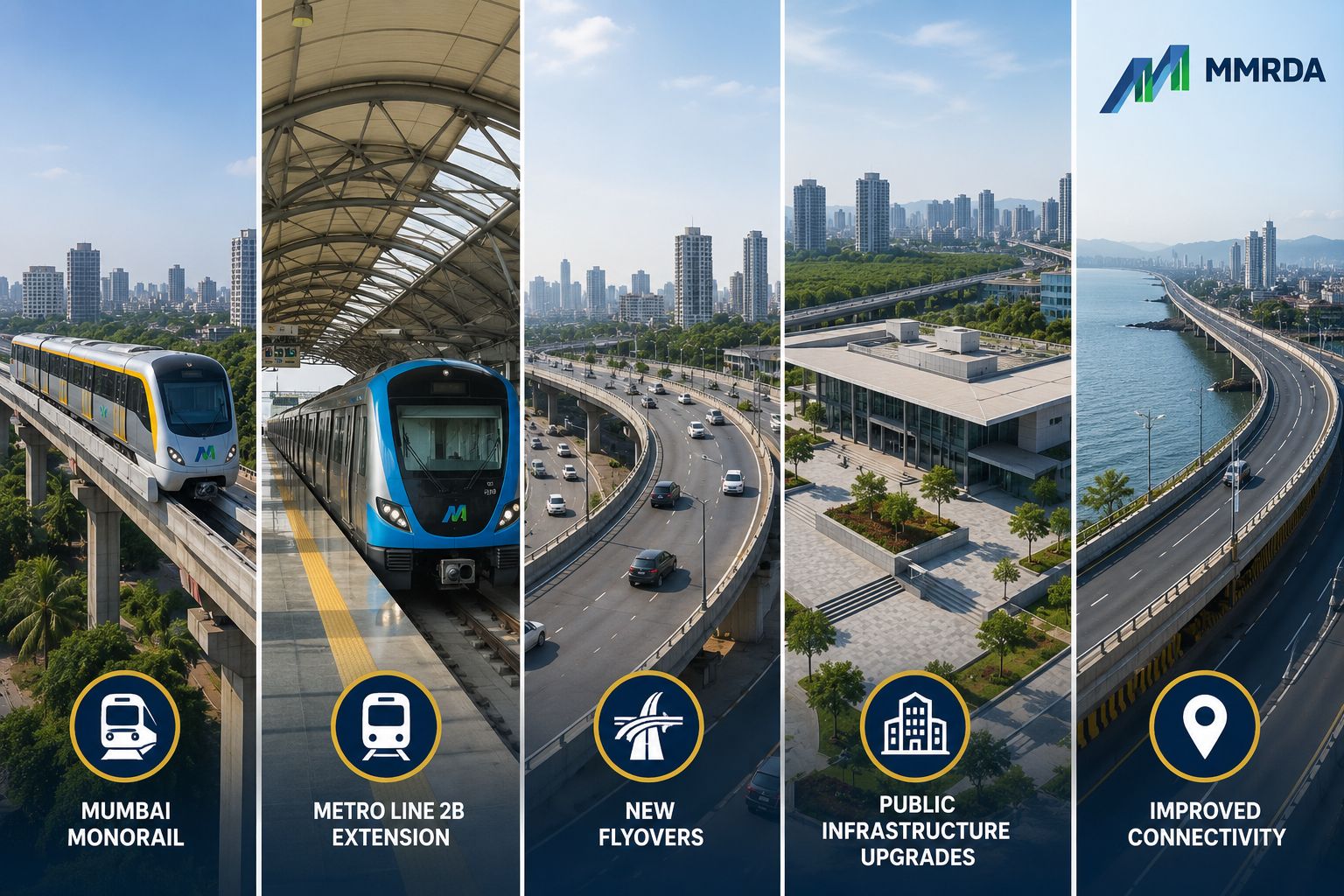
The upcoming openings include the relaunch of the Mumbai Monorail, the extension of Metro Line 2B to Chembur Naka, the completion of the final arm of the Santacruz-Chembur Link Road, the opening of a new public plaza at Kalanagar, and the inauguration of the Golden Nest Flyover in Mira-Bhayandar.
Collectively, these projects are expected to improve daily commuting conditions for thousands of residents across Mumbai's eastern suburbs, western suburbs, and emerging growth corridors.
Mumbai Monorail Set for a Comeback
One of the most closely watched developments is the relaunch of the Mumbai Monorail following months of upgrades, technical improvements, and safety checks. The system has undergone extensive modernisation aimed at improving reliability, passenger safety, and operational efficiency.
The relaunch is particularly important because the Monorail serves as a key east-west connectivity link between Chembur, Wadala, and South Mumbai. Improved integration with the metro network is expected to strengthen its role within Mumbai's public transportation ecosystem.
For commuters in the eastern suburbs, the return of Monorail services could provide an additional travel option while reducing dependence on road transport.
Metro Line 2B Extension to Strengthen Connectivity
Another significant project is the extension of Metro Line 2B to Chembur Naka, creating an important interchange point between Mumbai's metro and monorail systems. The extension is expected to improve last-mile connectivity and make public transport more convenient for residents travelling across the eastern corridor.
Interchange stations are often among the most valuable components of metro systems because they allow passengers to move seamlessly between different transit modes.
Improved connectivity can also stimulate commercial activity and residential demand around transportation hubs.
Santacruz-Chembur Link Road Nears Completion
The final arm of the Santacruz-Chembur Link Road (SCLR) is also set to open, further strengthening east-west connectivity across Mumbai. The corridor has long served as a critical route connecting the western suburbs with the eastern suburbs and key business districts.
Additional connectivity improvements on the SCLR are expected to reduce congestion, improve travel times, and provide smoother access to major commercial centres including Bandra Kurla Complex (BKC).
For daily commuters, even modest reductions in travel time can translate into significant improvements in quality of life.
Golden Nest Flyover to Ease Traffic in Mira-Bhayandar
The Golden Nest Flyover in Mira-Bhayandar is another project expected to deliver immediate benefits. The flyover aims to address traffic bottlenecks in one of the fastest-growing residential regions within the Mumbai Metropolitan Region.
Improved road infrastructure often plays a critical role in supporting suburban expansion by reducing travel delays and enhancing accessibility.
As Mira-Bhayandar continues to attract homebuyers seeking comparatively affordable housing options, transportation upgrades are expected to remain a key driver of real estate demand.
New Art and Event Plaza at Kalanagar
Alongside transportation projects, MMRDA is also preparing to open a new Art and Event Plaza at Kalanagar. The project is intended to create a dedicated public space for cultural, recreational, and community activities.
The development reflects a growing focus on urban placemaking, where infrastructure investment extends beyond transportation to include public spaces that improve the overall quality of urban life.
Well-designed public spaces can contribute to stronger community engagement while enhancing the attractiveness of surrounding neighbourhoods.
Infrastructure and Real Estate Go Hand in Hand
Infrastructure upgrades have historically played a major role in shaping Mumbai's property market. Improved transportation corridors often lead to stronger residential demand, higher commercial activity, and increased investor interest in connected locations.
Areas benefiting from metro stations, flyovers, road corridors, and transit interchanges frequently experience stronger long-term appreciation because connectivity remains one of the most important factors influencing property values.
The upcoming MMRDA projects are expected to strengthen accessibility across multiple parts of the metropolitan region, potentially benefiting both residents and the real estate market.
What It Means for Mumbai's Future
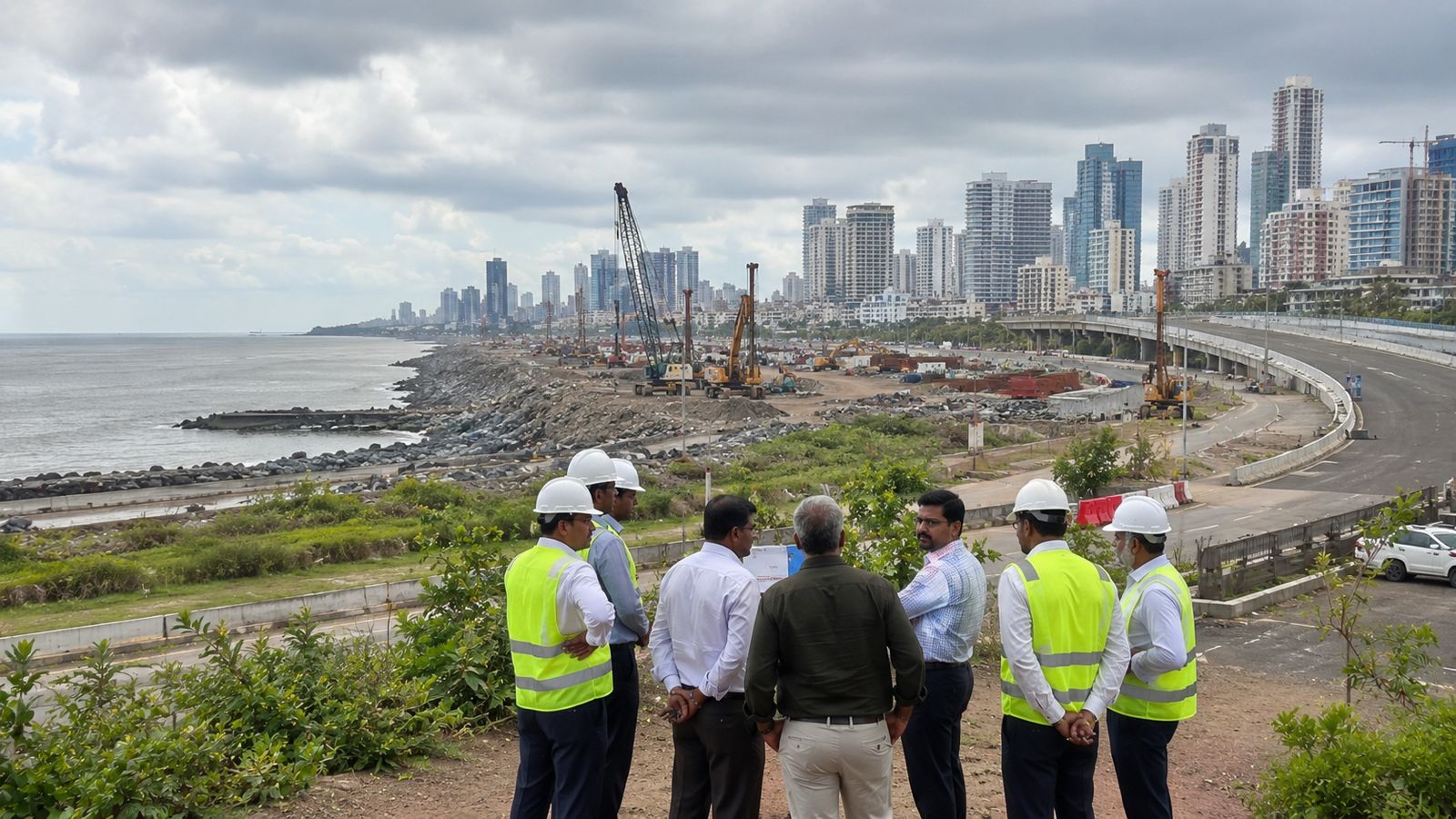
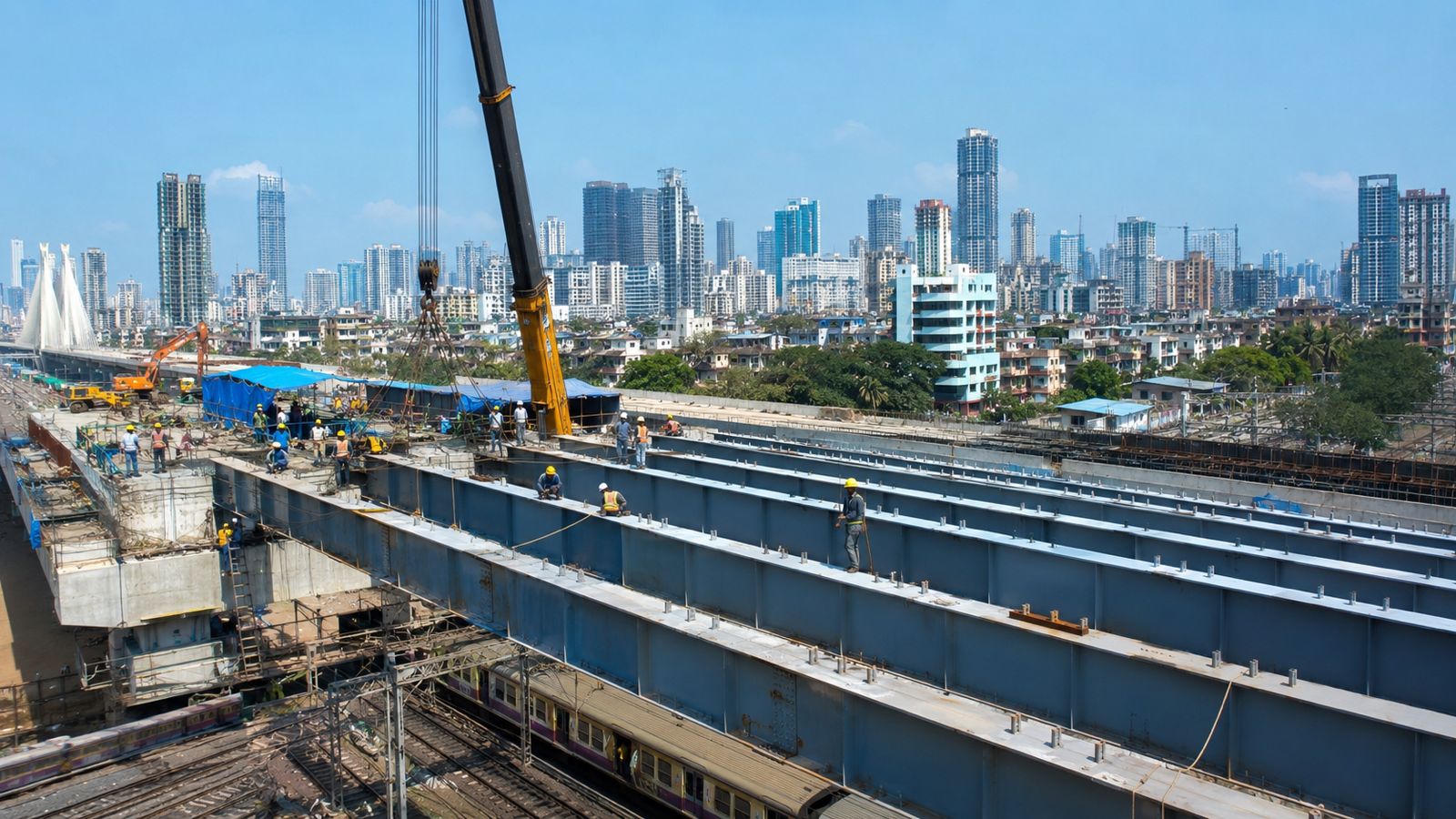
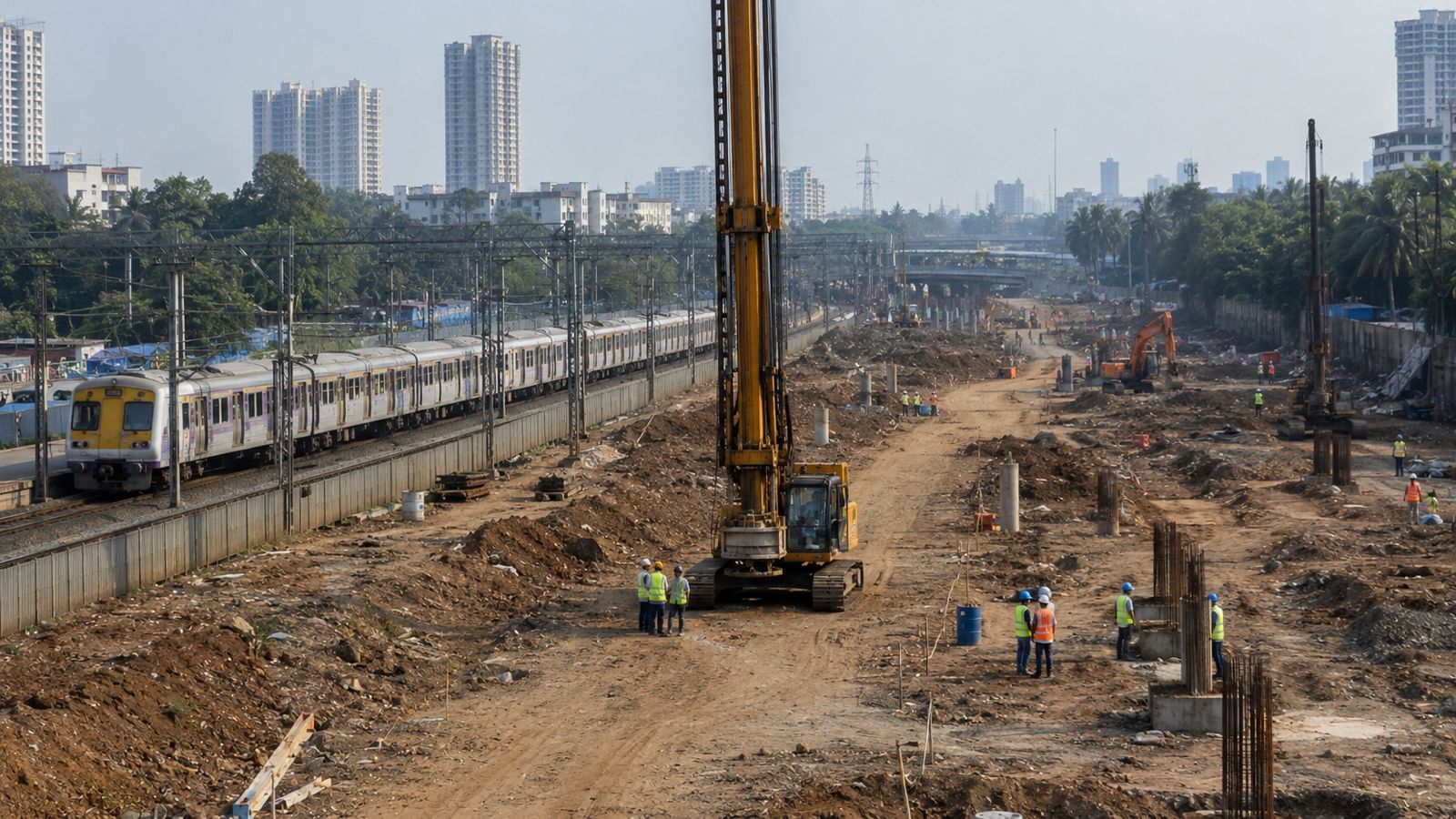
Mumbai is currently witnessing one of the largest infrastructure expansion cycles in its history. Metro lines, flyovers, coastal roads, tunnels, airports, and regional transportation projects are collectively reshaping mobility across the city and its surrounding growth corridors.
The opening of these five projects may not individually transform the city, but together they represent another step toward creating a more connected metropolitan region.
For commuters, the immediate benefits will be shorter travel times and improved mobility. For the real estate sector, enhanced infrastructure continues to reinforce long-term growth across Mumbai, Thane, Navi Mumbai, and Mira-Bhayandar.
Expert View
"Connectivity remains the single biggest driver of real estate growth in the Mumbai Metropolitan Region. Whether through metro systems, flyovers, link roads, or multimodal transit hubs, infrastructure investment directly influences property demand and economic activity. The opening of these projects further strengthens Mumbai's long-term urban growth story." — Sandeep Sadh