Amazon Leases data Centre Space in powai from L&T
A Landmark Lease That Goes Beyond Real Estate
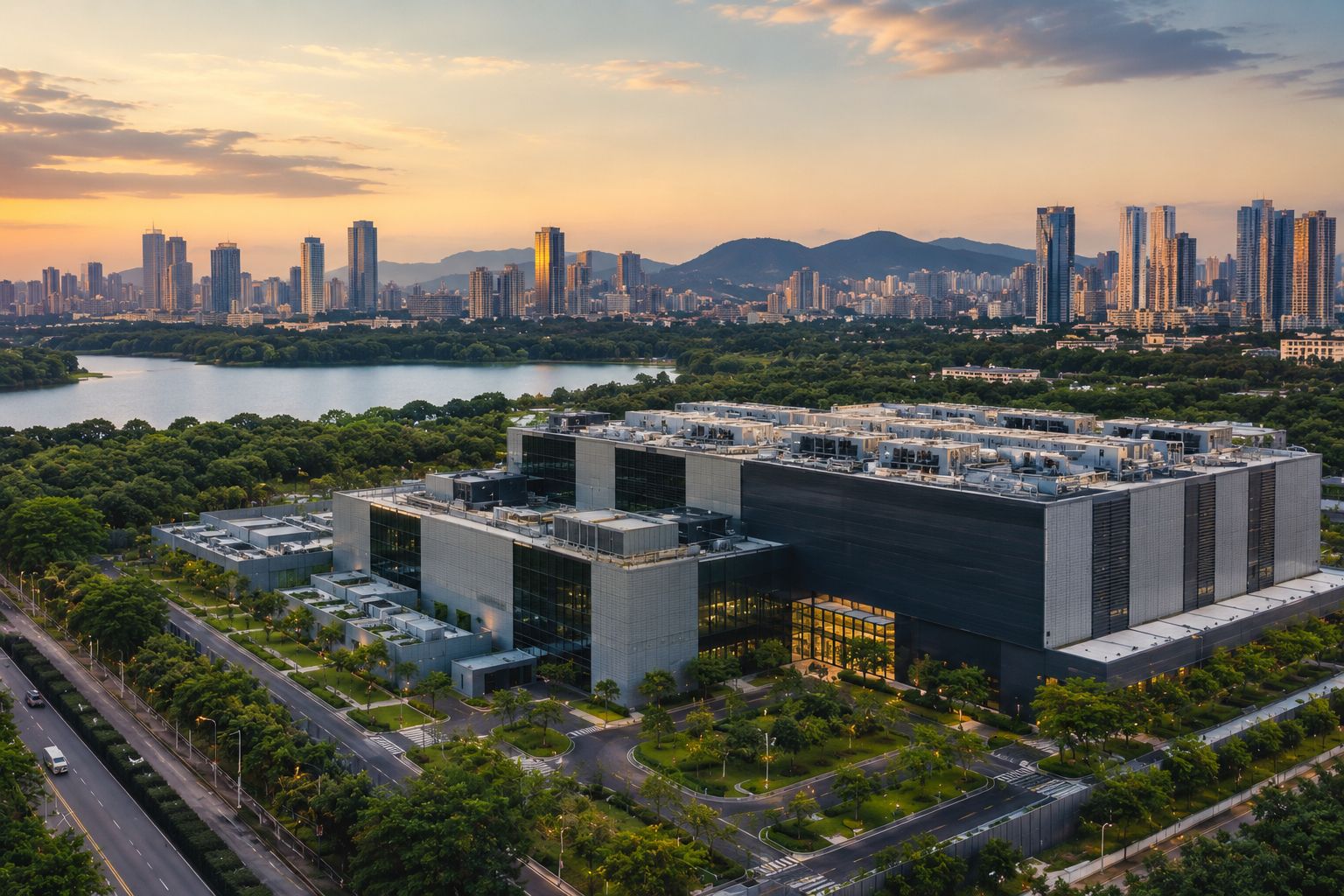
When Amazon Data Services India signed a long-term lease for nearly four acres of land from Larsen & Toubro (L&T) in Powai, the headline naturally focused on the numbers—a rental commitment exceeding ₹650 crore over a lease tenure of more than 17 years. But beyond the size of the deal lies a much bigger story. This isn’t simply another corporate lease; it’s a strategic investment in the future of India’s digital economy and a strong endorsement of Mumbai as the country’s leading data centre hub.
Amazon Continues to Expand Its Powai Footprint
This latest agreement is Amazon’s third major transaction within the L&T campus in Powai. The company first leased approximately 5.5 acres in 2022, followed by another four acres in 2023. With this latest lease, Amazon’s footprint in Powai has expanded to nearly 13.5 acres. Such successive investments are rarely made unless an organisation has a long-term vision for a location. Unlike conventional office occupiers who may relocate as business needs evolve, hyperscale data centre operators build infrastructure that is expected to serve for decades.
A Long-Term Commitment Reflected in the Lease Structure
The structure of the transaction itself speaks volumes. The lease spans over 17 years, carries a monthly rental of approximately ₹2.76 crore, includes a 3% annual escalation and an upfront premium. These are not the characteristics of a routine commercial lease. They reflect a business that values operational stability, infrastructure reliability and long-term scalability over short-term cost considerations.
How L&T Is Unlocking Long-Term Asset Value
For L&T, this transaction demonstrates the growing importance of institutional asset monetisation. Rather than divesting ownership of a strategic land parcel, the company has chosen to retain the asset while creating a predictable long-term revenue stream through lease rentals. It is a strategy increasingly adopted by large corporates—unlocking the value of surplus land without losing ownership of an appreciating asset. In an environment where quality land in Mumbai is becoming increasingly scarce, this approach allows landowners to enjoy both recurring income and future capital appreciation.
Building a Larger Digital Infrastructure Network Across MMR
However, viewing this transaction in isolation would miss the larger picture. Amazon is not simply expanding in Powai—it is systematically building a digital infrastructure network across the Mumbai Metropolitan Region (MMR).
Beyond Powai, Amazon has significantly expanded its presence in the Palava region of Thane district. In late 2024, the company acquired approximately 38 acres of land for around ₹450 crore to develop a hyperscale data centre campus. It followed this with another acquisition of over 10 acres in 2026, taking its total landholding in the area to nearly 49 acres. While Powai provides immediate connectivity to Mumbai’s enterprise ecosystem, Palava offers the large contiguous land parcels necessary for future expansion. Together, these investments suggest that Amazon is creating complementary digital infrastructure hubs rather than relying on a single location.
A Smart Real Estate Strategy Tailored to Each Location
Interestingly, Amazon’s approach differs by location. In Powai, where L&T already owns a well-established technology and industrial campus, leasing provides speed, flexibility and immediate access to world-class infrastructure. In Palava, where larger land parcels are available for long-term development, outright ownership offers greater control over future expansion. This demonstrates that the company is not merely acquiring or leasing land—it is optimising its real estate strategy based on the strengths of each location.
Why Mumbai Remains India’s Leading Data Centre Destination
The choice of Mumbai is equally significant. The city remains India’s largest data centre market for compelling reasons. It is home to multiple submarine cable landing stations that connect India to global internet networks, offers one of the country’s most extensive fibre optic ecosystems, provides access to reliable power infrastructure and serves as headquarters to banks, financial institutions, multinational corporations, media companies and technology firms that generate enormous volumes of digital traffic. As cloud computing, artificial intelligence and enterprise digitisation continue to accelerate, demand for secure, high-capacity data centre infrastructure will only grow.
The Rise of Data Centres as a Commercial Real Estate Asset Class
This also signals a broader transformation in commercial real estate. For decades, developers focused on attracting banks, IT companies and multinational corporations into office buildings. Today, another category of occupier is becoming just as important—global cloud providers and hyperscalers. Unlike traditional office tenants, these companies invest over much longer horizons, require specialised infrastructure and create significant institutional value around the assets they occupy. Their presence often drives improvements in power infrastructure, fibre connectivity and industrial development, creating a multiplier effect for the surrounding region.
The Future of Mumbai’s Digital Real Estate Story
The real takeaway from Amazon’s latest lease is not the rental value or the acreage involved. It is the confidence that one of the world’s largest technology companies continues to place in Mumbai and the broader MMR. Powai, Thane and the emerging digital corridors across the region are no longer competing locations—they are becoming interconnected pieces of India’s digital backbone.
As artificial intelligence, cloud computing and digital services continue to reshape the global economy, the infrastructure supporting them will become just as valuable as the technology itself. Investors who once tracked office absorption and residential launches may soon find themselves paying equal attention to data centres, fibre networks and digital infrastructure. The next chapter of Mumbai’s real estate story may well be written not just by the people who occupy buildings, but by the servers that power the world’s digital economy.
— Sandeep Sadh
Founder, Mumbai Property Exchange