Maharashtra Clears ₹22,611 Crore Metro, Tunnel and Elevated Corridor Projects to Transform MMR Connectivity
Massive Infrastructure Push Approved for Mumbai Metropolitan Region
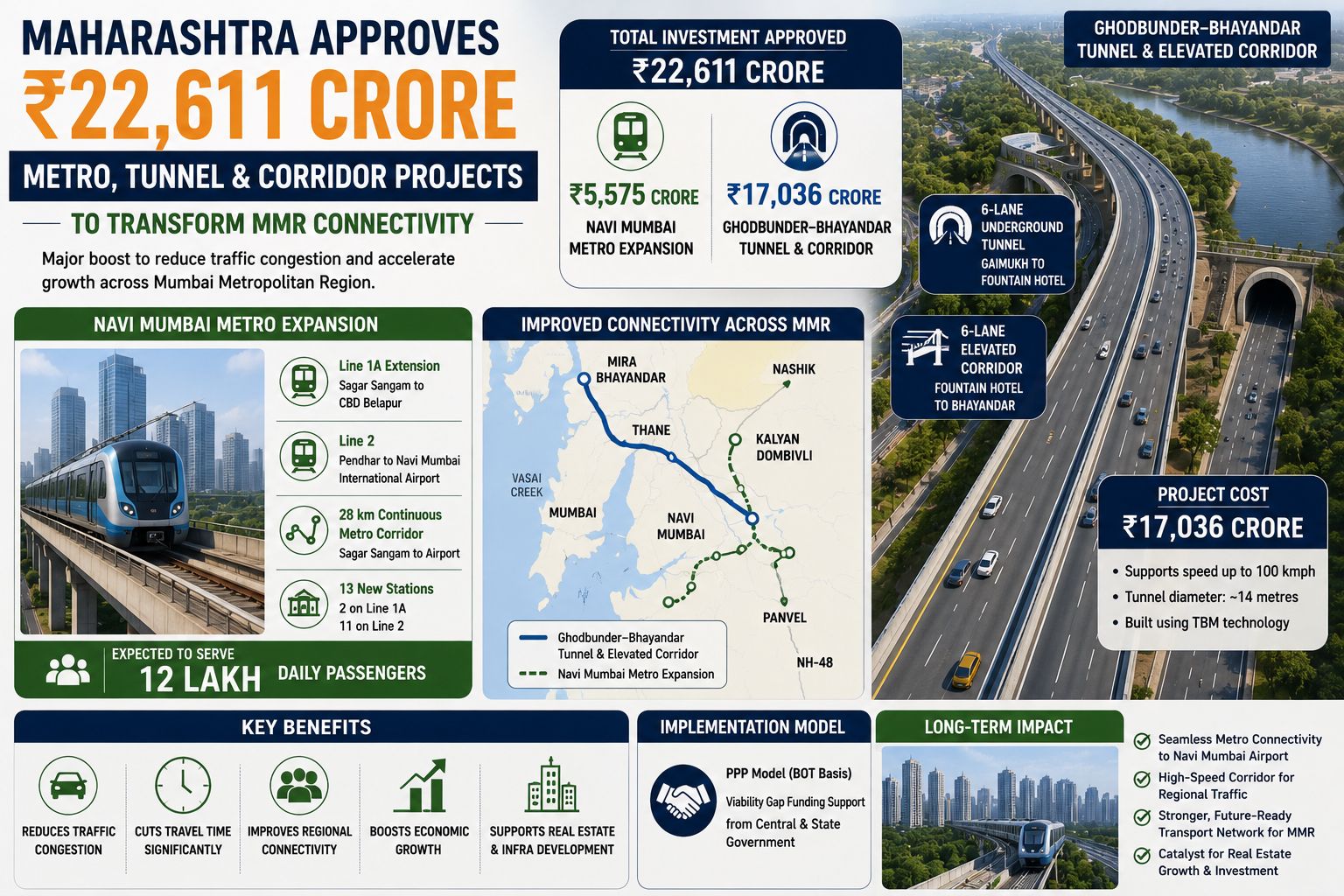
In one of the largest transportation infrastructure approvals in recent years, the Maharashtra Cabinet Infrastructure Committee has sanctioned projects worth ₹22,611 crore to improve mobility across the Mumbai Metropolitan Region (MMR).
The approved package includes two major components: a ₹5,575 crore expansion of the Navi Mumbai Metro network and a ₹17,036 crore tunnel and elevated corridor project connecting Ghodbunder Road with Bhayandar. Together, these projects are expected to significantly reduce travel times, decongest key road networks, and improve connectivity between Mumbai, Thane, Navi Mumbai, and surrounding growth corridors.
The approvals were granted by the Cabinet Infrastructure Committee chaired by Maharashtra Chief Minister Devendra Fadnavis.
₹5,575 Crore Navi Mumbai Metro Expansion Gets Approval
A major portion of the investment will go towards expanding the Navi Mumbai Metro network and improving connectivity to the upcoming Navi Mumbai International Airport.
The project includes:
- Metro Line 1A extension from Sagar Sangam to CBD Belapur
- Metro Line 2 connecting Pendhar to Navi Mumbai International Airport
- A continuous 28-kilometre metro corridor from Sagar Sangam to the airport
- 13 new metro stations, including two on Line 1A and eleven on Line 2
Once completed, the network will create a seamless metro connection across Navi Mumbai and provide direct public transport access to the international airport.
Metro Network Expected to Serve 12 Lakh Daily Passengers
The expanded metro system is projected to handle approximately 12 lakh commuters per day in the coming years.
Authorities expect the project to significantly reduce dependence on road transport, improve commuting efficiency, and support the rapid urbanisation taking place across Navi Mumbai. The metro extension is also expected to strengthen connectivity between residential nodes, commercial districts, and airport-linked development zones.
The project is expected to become one of the most important public transport upgrades supporting the growth of the airport influence zone.
₹17,036 Crore Tunnel and Elevated Corridor Project Approved
The larger component of the infrastructure package is the Ghodbunder Road-Bhayandar tunnel and elevated corridor project, approved at a cost of ₹17,036 crore.
The project consists of:
- A six-lane underground tunnel between Gaimukh and Fountain Hotel
- A six-lane elevated corridor from Fountain Hotel to Bhayandar
- A total investment exceeding ₹17,000 crore
- Infrastructure designed to support speeds of up to 100 kmph
The tunnel will be constructed using Tunnel Boring Machine (TBM) technology and will have a diameter of approximately 14 metres.
Major Relief for Ghodbunder Road Traffic
Ghodbunder Road has long been one of the most congested transport corridors in the Mumbai Metropolitan Region.
The proposed tunnel and elevated corridor are designed to divert through traffic away from surface roads and create a faster route for vehicles travelling towards Thane, Gujarat, Nashik, Panvel, and National Highway 48.
Officials believe the project will substantially reduce congestion on existing road infrastructure while improving regional freight and passenger movement.
The elevated corridor will run parallel to Vasai Creek, creating a new high-speed transport link along the western edge of the metropolitan region.
Better Connectivity Across Multiple Growth Corridors
One of the most significant benefits of the project is its regional impact.
The tunnel and elevated corridor are expected to improve connectivity between:
- Western Mumbai
- Thane
- Kalyan-Dombivli
- Navi Mumbai
- Panvel
- Nashik
- National Highway 48
- Gujarat-bound traffic routes
The project is intended to function not only as a congestion-relief measure but also as a long-term economic corridor supporting trade, logistics, and urban expansion.
PPP Model to Be Used for Execution
The road infrastructure project will be implemented under a Public-Private Partnership (PPP) model on a Build-Operate-Transfer (BOT) basis.
The project will receive viability gap funding support from both the Central Government and the Maharashtra Government, reducing financial risk while encouraging private-sector participation.
This approach is increasingly being used for large transportation projects requiring substantial upfront investment.
Impact on Real Estate
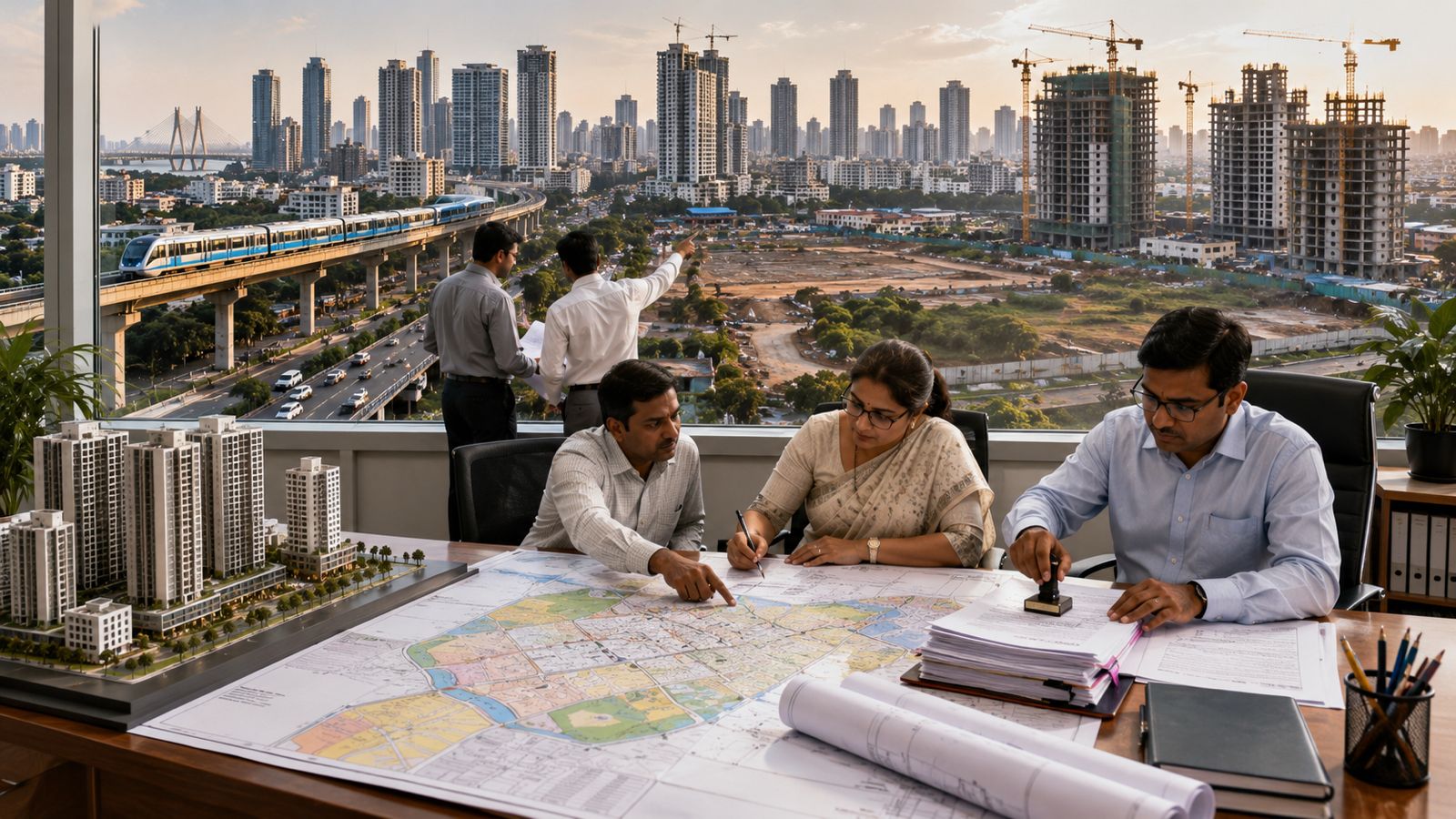
The approved projects are expected to have a significant impact on property markets across the Mumbai Metropolitan Region.
Metro infrastructure has historically supported residential and commercial appreciation by improving accessibility and reducing commute times. Areas along the Navi Mumbai Metro corridor, particularly those connected to the airport, could witness increased housing demand and commercial activity.
Similarly, the Ghodbunder-Bhayandar corridor is expected to unlock development opportunities across Mira-Bhayandar, Thane, Ghodbunder Road, and surrounding growth nodes. Improved road connectivity often expands the catchment area for residential buyers and encourages new commercial investments.
The combination of metro infrastructure and regional road connectivity could create some of the strongest long-term real estate growth corridors within the MMR.
Why This Matters for Navi Mumbai
The Navi Mumbai Metro expansion is particularly important because it directly complements the upcoming Navi Mumbai International Airport.
Major airports often act as catalysts for residential, commercial, logistics, hospitality, and industrial development. Efficient metro connectivity helps maximise the economic impact of airport-led growth by improving accessibility for passengers, workers, and businesses.
As airport operations expand, the metro network is expected to play a crucial role in supporting sustainable urban growth throughout Navi Mumbai.
The Road Ahead
The approval of ₹22,611 crore worth of infrastructure projects signals Maharashtra's continued focus on transportation-led development.
The combination of metro expansion, high-speed road corridors, tunnels, and airport connectivity is expected to reshape mobility patterns across the Mumbai Metropolitan Region over the next decade.
If executed on schedule, these projects could significantly improve commuting efficiency, support economic activity, unlock new development zones, and strengthen the long-term competitiveness of Mumbai and Navi Mumbai as growth centres.
Expert View
"Transport infrastructure remains one of the strongest drivers of real estate appreciation and economic growth. The Navi Mumbai Metro expansion and the Ghodbunder-Bhayandar corridor are not isolated projects—they are part of a larger effort to integrate the entire metropolitan region. Areas benefiting from both metro connectivity and improved road access are likely to emerge as the next major growth corridors within the MMR." — Sandeep Sadh