Worli: The Choice of Billionaires
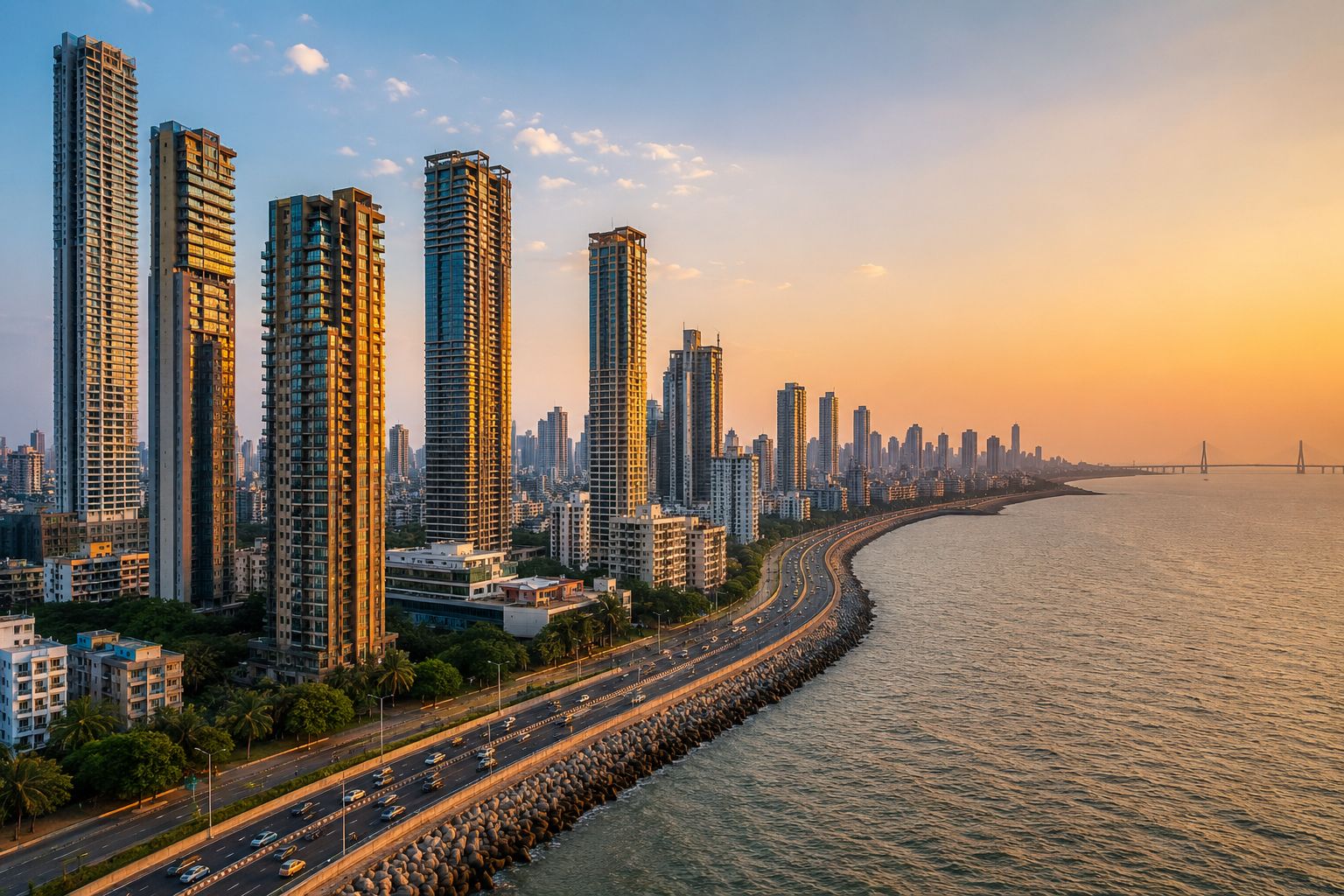
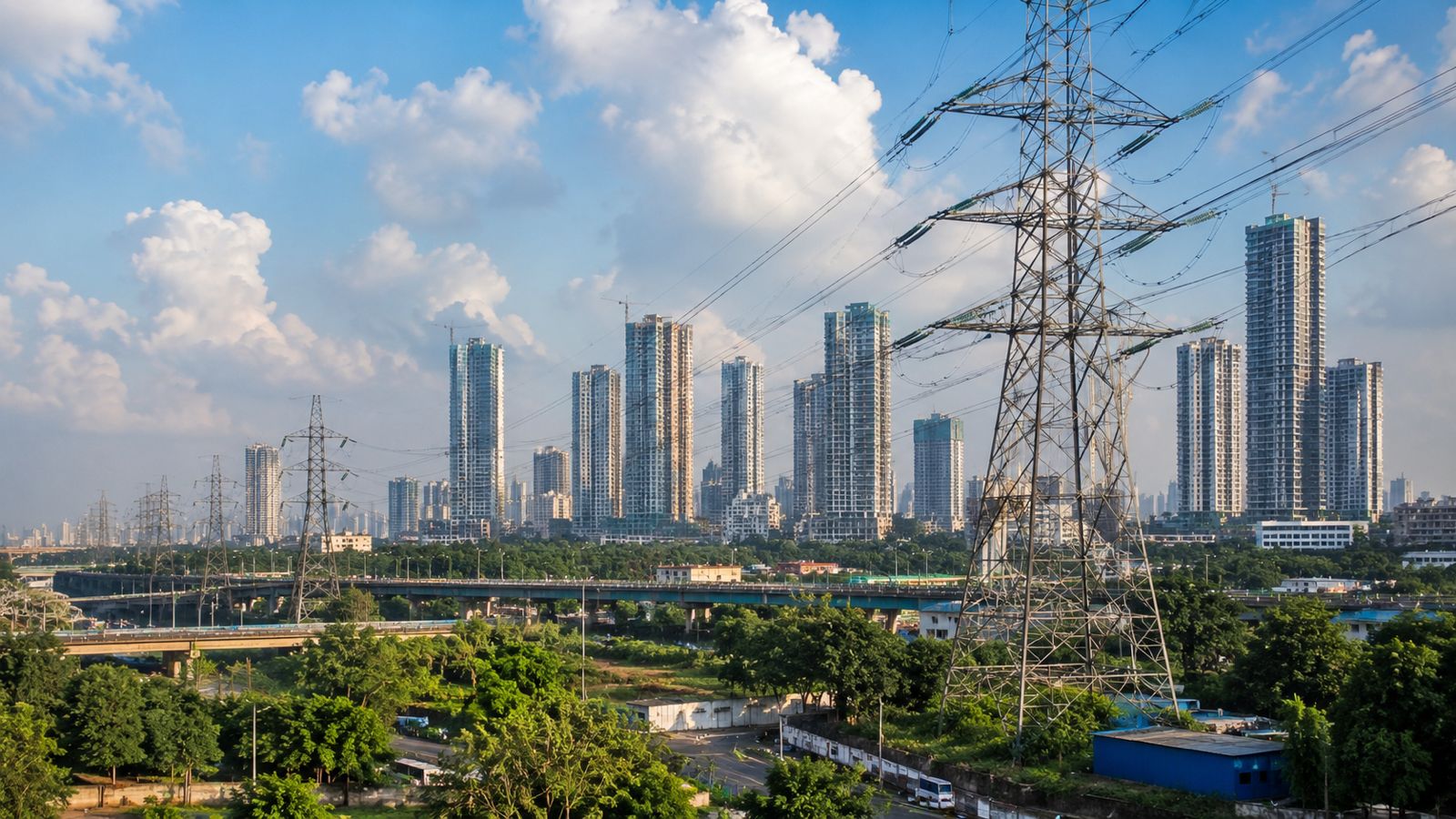
I'm crossing the link, and on my left the entire Prabhadevi and South Mumbai skyline unfolds. I find myself wondering what has happened here over the past fifteen years. Then it dawns on me: I am staring at the most expensive real estate in Mumbai.
Each apartment here starts somewhere around ₹10 crore and climbs without ceiling — ₹100 crore, ₹200 crore, ₹300 crore. The numbers don't seem to have a limit anymore.
The beauty of Worli is that it sits right at the centre of the city, on one of its most easily accessible routes. Thanks to the coastal road, it has become effortless to reach — barely twelve to fifteen minutes from Nariman Point in the south, and just as seamless from Bandra to the north, gliding the whole way along the coast.
That is what makes Worli a dream address: it is so well connected that you can get in and get out without the city ever slowing you down. And the people who chose Worli early — the ones with the foresight — kept exactly this factor in mind. For them, time is the real currency. In a city like Mumbai, commuting across town on an open coastal road isn't an inconvenience; it is a genuine luxury.
So let me take you through what I've come to understand about this remarkable stretch of coastline.
Why the richest buyers keep choosing Worli
Worli's rise was no accident of fashion. It sits at the precise midpoint between the old money of South Mumbai and the commercial engine rooms of Bandra-Kurla Complex and Lower Parel. The Bandra-Worli Sea Link brought Bandra within minutes; the coastal road and the upcoming metro have only tightened the grid further.
But the deeper draw is something money simply cannot manufacture: a finite quantity of unobstructed sea. There are only so many west-facing floors along this coast, and they will never be built again. Scarcity, not square footage, is what these buyers are really paying for.
The numbers tell the story. Apartments along the Worli sea face now command rates above ₹1,00,000 per square foot, against an area average closer to ₹69,000. That gap — a 45 to 50 percent premium for a true sea view — is no marketing line. It is a difference the resale market validates again and again, every time one of these homes changes hands.
The deals that define the street
Nothing illustrates Worli's pull better than the transactions themselves — each one a matter of public record, registered with the state, and each one a quiet signal to the next buyer.
Naman Xana — India's most expensive home
The address that has rewritten the ceiling entirely is Naman Xana, rising on a rare standalone plot on Worli Sea Face. Here, Leena Gandhi Tewari, chairperson of the pharmaceutical major USV, acquired two sea-facing duplexes for a combined ₹639 crore — the most expensive residential apartment deal ever registered in India.
The twin units span a carpet area of 22,572 square feet across the 32nd to 35th floors, transacted at roughly ₹2.83 lakh per square foot. Including stamp duty and GST, the total outlay approached ₹703 crore. An earlier duplex in the same building, linked to the family of Godrej Industries chairman Adi Godrej, closed at nearly ₹226 crore.
What makes Naman Xana so remarkable is what it lacks. Its developer is not a legacy luxury brand like Lodha or Oberoi. There were no celebrity faces at the launch, no marketing blitz — and yet it has out-priced every marquee name on the street. In Worli, it turns out, the land sets the price, not the logo on the hoarding.
Raheja Artesia — the ₹100 crore club
At Raheja Artesia, the single ultra-luxury tower on Hind Cycle Marg, the K Raheja Corp promoter family sold an apartment for ₹121 crore — about ₹1.7 lakh per square foot — to Shree Dhootapapeshwar, a Mumbai Ayurvedic medicine maker. Weeks earlier, another residence here changed hands for ₹123.5 crore, bought by Radha Tanti of the Suzlon Energy family. In a separate deal, Shiven Arora, managing director of Blue Jet Healthcare, acquired a home for ₹88 crore.
Lodha Sea Face and Oberoi Three Sixty West
At Lodha Sea Face, a penthouse sold for ₹185 crore — a figure that would have been unthinkable a decade ago. At Oberoi's Three Sixty West, whose owners read like a directory of Indian achievement, a residence of around 6,830 square feet sold for ₹80 crore, with registered deals at the project running into the low thousands of crores.
The new generation
The pattern keeps repeating. At Palais Royale — at 320 metres, the tallest residential tower in the country — Amit Rathi of QiCAP.AI bought a home for nearly ₹90 crore, while Blue Jet Healthcare's chairman took two units. At Prestige Nautilus, former HDFC Bank deputy MD Paresh Sukthankar picked up a home for ₹52.49 crore, one of eighteen deals there crossing ₹600 crore. At Kalpataru One, the Poonglia family acquired a residence for ₹60.39 crore. And Birla Niyaara, the sprawling Birla Estates development off Pandurang Budhkar Marg, is already selling primary inventory near ₹1 lakh per square foot.
For sheer perspective on the ceiling: veteran banker Uday Kotak is reported to have acquired a sea-facing building in Worli for over ₹400 crore, with some units closing near ₹2.9 lakh per square foot including land rights.
These are not outliers. They are the new normal of a micro-market where deals above ₹100 crore have stopped being headlines and become routine.
Worli's luxury price ladder
| ProjectTop reported rate (₹/sq.ft.)Headline deal | ||
| Naman Xana | ₹2.83 lakh | ₹639 cr (national record) |
| Raheja Artesia | ₹1.7–1.82 lakh | ₹123.5 cr |
| Lodha Sea Face | ₹1.24 lakh | ₹185 cr |
| Prestige Nautilus | ₹1.19 lakh | ₹52.49 cr |
| Palais Royale | ₹1.17 lakh | ~₹90 cr |
| Three Sixty West | ₹1.17 lakh | ₹80 cr |
| Birla Niyaara | ~₹1.0 lakh | primary sale |
Scarcity or liquidity: the choice every buyer makes
For all its glamour, Worli rewards different buyers in different ways — and the smart money understands the distinction.
The most exclusive towers — Naman Xana, Raheja Artesia, Three Sixty West, Lodha Sea Face — are scarcity plays. Very few units, very high per-square-foot rates, and the strongest long-term appreciation. The trade-off is patience: they transact slowly, because the pool of buyers who can write a ₹100-crore cheque is, by definition, small.
The Lodha ecosystem — projects like The Park and World Towers — offers what those towers cannot: liquidity. Brand recognition, scale, and a large resident community mean these homes resell faster and more predictably.
So the real question is never simply which building has the better view. It is whether you are buying a trophy or a tradable asset.
What I believe the next few years hold
Worli has delivered roughly 30 to 38 percent appreciation over the past three years — a run few asset classes anywhere have matched. But if I am honest with myself, the wise approach now is to plan for a longer horizon. The pace of 2022 to 2025 is unlikely to repeat at the same speed, and a buyer with a five-year-plus view will be far better placed than one chasing a quick re-rating.
What is not in doubt is the underlying logic. A finite coastline, deepening demand from India's wealthiest families, and a location that grows more central with every new road and metro line — these are structural forces, not passing trends. Worli is not coveted because it is fashionable. It is coveted because it is rare, and rarity, in a city of twenty million, is the one thing that cannot be developed.
And so, as I come off the link with the skyline still glowing on my left, the thought settles in fully. For India's billionaires, Worli is not merely where they live. It is where they store the proof of having arrived.
Worli's appeal goes far beyond luxury. Its combination of connectivity, sea-facing inventory, and limited supply continues to attract India's wealthiest buyers. As infrastructure improves and developable coastline remains scarce, Worli is likely to remain one of Mumbai's most valuable and sought-after residential markets.
— Sandeep Sadh