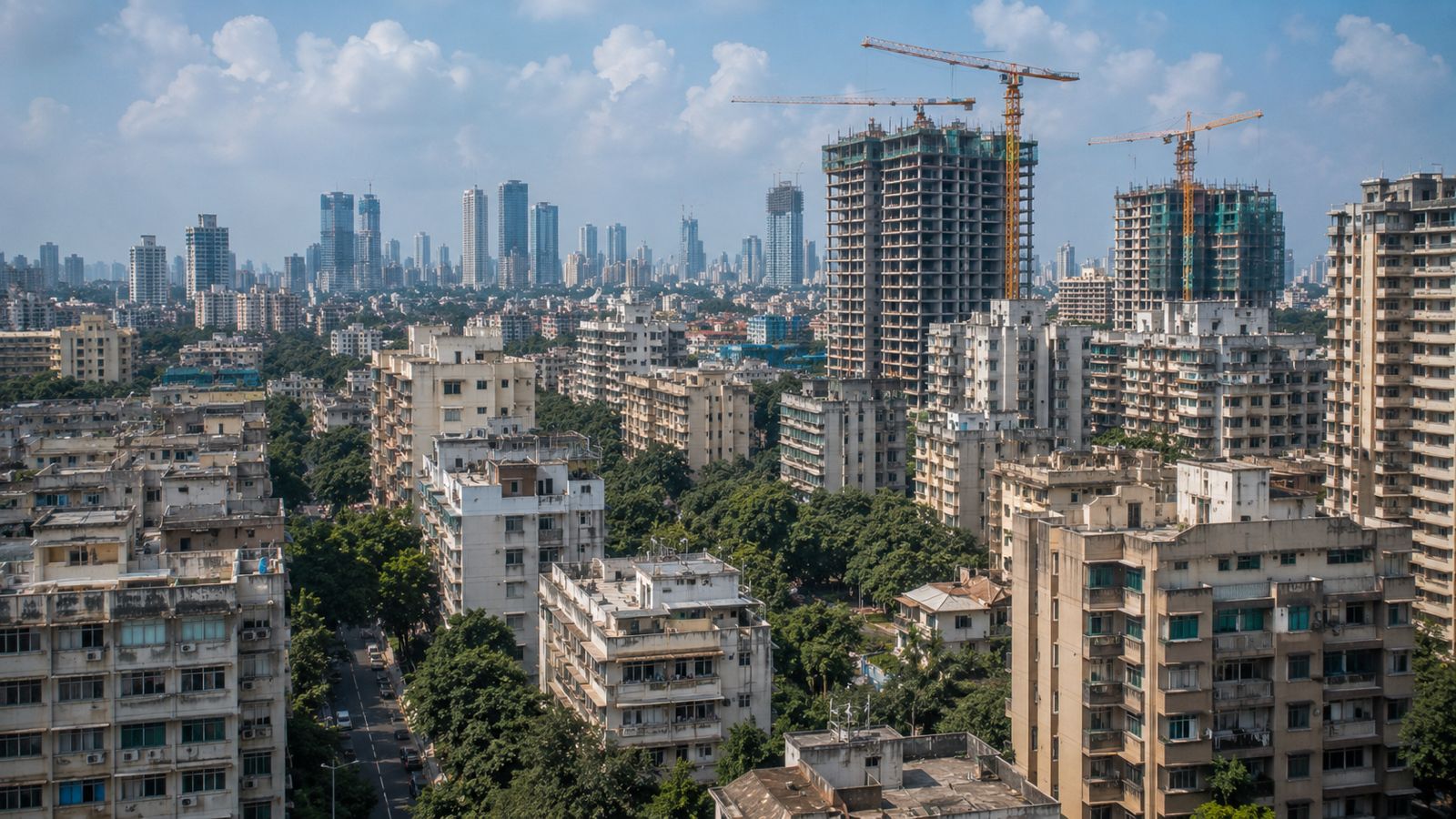
BMC OC Amnesty Scheme for Pre-2016 Buildings

BMC Revives Occupation Certificate (OC) Amnesty Scheme for Pre-November 2016 Buildings in Mumbai
Thousands of Mumbai Homeowners May Finally Receive Long-Pending Occupation Certificates
In a major relief for homeowners across Mumbai, the Brihanmumbai Municipal Corporation (BMC) has revived its proposal to introduce an Occupation Certificate (OC) Amnesty Scheme for buildings occupied before 17 November 2016. If approved, the scheme could help thousands of residential buildings obtain long-pending Occupation Certificates, improving legal clarity and enhancing property value.
The proposal, expected to be considered by the civic standing committee, aims to resolve one of Mumbai’s most persistent real estate issues—approved buildings that have remained occupied for years but never received their final Occupation Certificate due to procedural delays or compliance-related issues.
What is the OC Amnesty Scheme?
An Occupation Certificate (OC) is a mandatory document issued by the municipal authority certifying that a building has been constructed according to the sanctioned plans and is fit for occupation.
Over the years, many buildings across Mumbai received approvals such as the Intimation of Disapproval (IOD) and Commencement Certificate (CC), yet failed to obtain an OC because of documentation gaps, pending compliances, or technical deviations. While residents have continued living in these buildings, the absence of an OC has created challenges during property sales, financing, insurance, redevelopment, and municipal approvals.
The proposed amnesty scheme is intended to provide relief in such genuine cases without regularising unauthorised construction.
Who Will Be Eligible?
As per the current proposal, the scheme will apply to:
* Buildings occupied before 17 November 2016
* Buildings with approved plans, valid IOD and Commencement Certificate
* Residential buildings, hospitals and schools
* Residential units with a carpet area of up to 80 square metres (approximately 861 sq.ft.)
Applications may be submitted by:
* Cooperative Housing Societies
* Developers
* Individual flat owners (in eligible cases)
Applications must be filed through registered architects or licensed surveyors along with documentary proof establishing occupation before the cut-off date.
What the Scheme Does Not Cover
The BMC has clarified that the scheme is not intended to legalise unauthorised construction.
Illegal floors, unauthorised extensions, excess FSI, or structures built without approval will continue to remain outside the scope of the proposal. The objective is to facilitate Occupation Certificates only for buildings that were substantially approved but could not obtain their final certification because of procedural or compliance-related issues.
The 80 Square Metre Debate
One of the most debated aspects of the proposal is the restriction limiting eligibility to homes with a carpet area of 80 square metres.
Several industry stakeholders and public representatives have urged the Maharashtra Government to remove this cap and extend the benefit to all eligible residential units, irrespective of size. There have also been demands to include commercial properties under the scheme.
The BMC has already forwarded these recommendations to the State Government and has indicated that the proposal may be revised further once fresh directions are received.
Impact on Mumbai’s Real Estate Market
If implemented, the scheme could significantly improve the legal status of thousands of residential properties across Mumbai.
Properties without an Occupation Certificate often face challenges including:
* Difficulty obtaining home loans
* Delays during resale transactions
* Reduced buyer confidence
* Insurance complications
* Issues during redevelopment projects
* Lower marketability despite being occupied for years
Granting Occupation Certificates to eligible buildings would improve transparency, facilitate smoother transactions, strengthen lending confidence among banks and financial institutions, and increase overall market liquidity.
What Property Owners Should Do
Housing societies and property owners who believe their buildings may qualify should begin organising relevant documentation, including:
* Property tax records
* Electricity bills
* Water connection records
* Occupancy-related documents
* Approved building plans and municipal approvals
Consulting a registered architect or licensed surveyor early will help ensure preparedness if the scheme receives final approval.
Sandeep Sadh’s Perspective
“The proposed OC Amnesty Scheme has the potential to unlock significant value across Mumbai’s legacy housing stock. Thousands of families have lived in approved buildings for years but continue to face legal and financial hurdles simply because an Occupation Certificate was never issued. This initiative can improve transparency, strengthen buyer confidence and simplify property transactions across the city.
However, to maximise its impact, the final policy should consider removing the current carpet area restriction and extend the benefit to all genuinely approved buildings, including commercial properties where appropriate. Such a balanced approach would provide long-awaited relief while maintaining the distinction between approved developments and unauthorised construction.”
— Sandeep Sadh, Founder, Mumbai Property Exchange
Final Thoughts
The revival of the Occupation Certificate Amnesty Scheme represents an important step towards resolving long-standing regulatory issues affecting Mumbai’s housing sector. While the proposal is still awaiting final approval and possible amendments from the Maharashtra Government, it signals a positive move toward providing legal certainty for thousands of homeowners.
For property buyers, sellers, housing societies, developers and investors, the progress of this scheme will be closely watched as it has the potential to reshape the legal and commercial landscape of many existing residential developments across Mumbai.