Mumbai Issues Stop-Work Notices to Over 1,000 Construction Sites for Dust Norm Violations
Mumbai Cracks Down on Construction Sites Over Dust Pollution
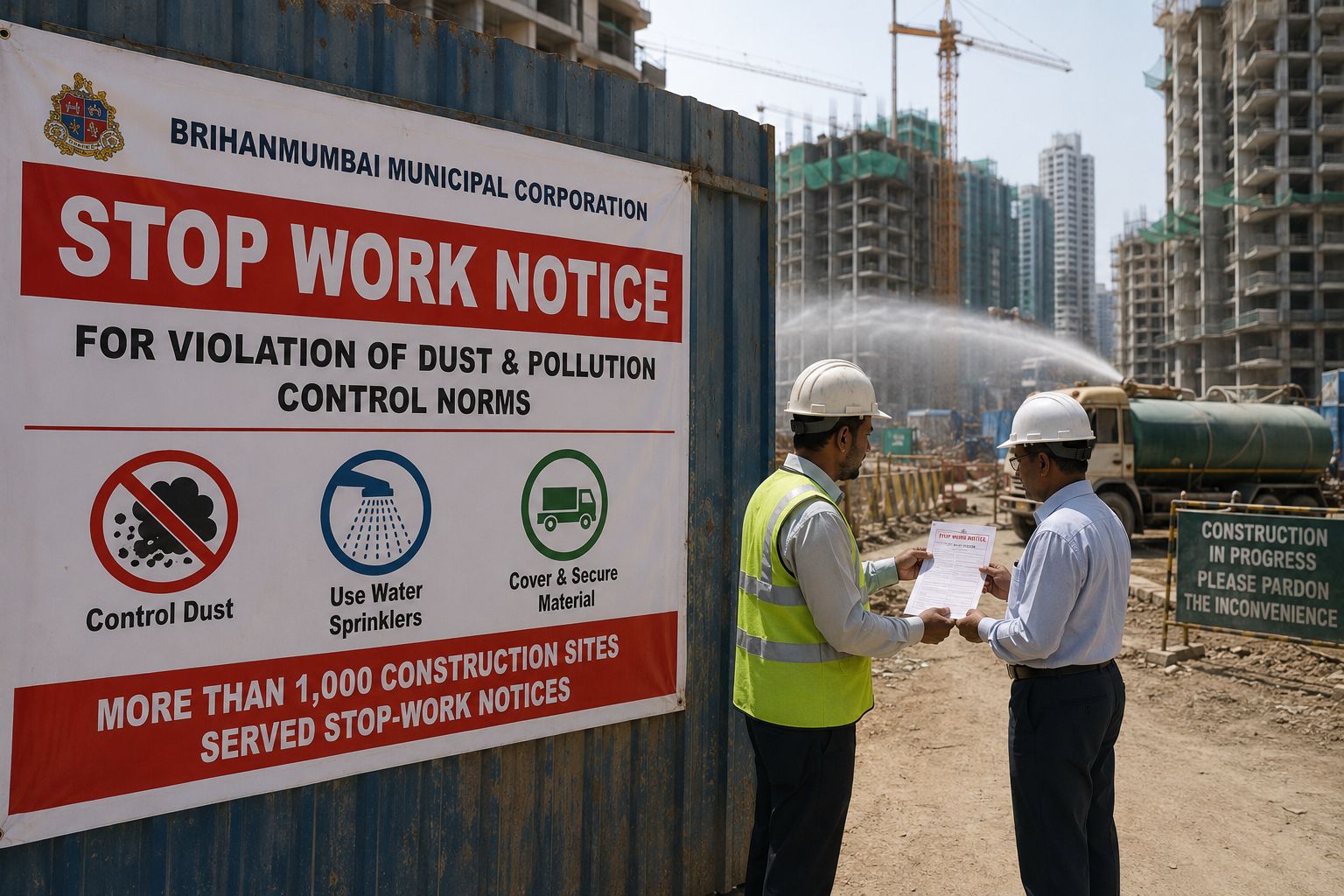
Mumbai has issued stop-work notices to more than 1,000 construction sites for allegedly failing to comply with dust and pollution control norms, marking one of the city's most extensive enforcement actions against construction-related air pollution. The move reflects growing concerns about deteriorating air quality and the need for stricter environmental compliance across Mumbai's rapidly expanding real estate and infrastructure sectors.
Construction activity remains one of the largest contributors to dust pollution in urban areas. With redevelopment, metro projects, road works, and residential developments underway across the city, authorities have intensified inspections to ensure developers and contractors follow prescribed pollution-control measures.
The large-scale action signals that environmental compliance is becoming an increasingly important aspect of project execution.
Why Authorities Are Taking Action
Dust generated during excavation, demolition, material transportation, and construction activities can significantly impact local air quality if not properly managed. Fine dust particles often spread beyond project boundaries, affecting nearby residential areas, commercial districts, and public spaces.
As Mumbai continues to witness large-scale construction activity, authorities are focusing on ensuring that project sites implement preventive measures designed to minimise environmental impact. The issuance of stop-work notices indicates a shift towards stricter monitoring and enforcement of existing regulations.
The objective is to reduce airborne dust and improve environmental conditions across the city.
Construction Dust Remains a Major Urban Challenge
Mumbai's ongoing transformation through redevelopment and infrastructure expansion has created significant construction activity across multiple locations. While these projects are essential for supporting economic growth and urban development, they also present environmental challenges that require careful management.
Construction-related dust can affect residents, commuters, businesses, and surrounding communities. During dry periods, dust generated from project sites can remain suspended in the atmosphere and contribute to declining air quality levels.
Managing this impact has become increasingly important as the city balances development needs with environmental sustainability goals.
Key Dust-Control Measures Required at Sites
Construction projects are required to implement several dust-mitigation measures as part of environmental compliance standards. These include installing barricades around project sites, regularly using water sprinklers to suppress dust, and ensuring that construction materials are properly covered during storage and transportation.
Barricading helps prevent dust from spreading beyond site boundaries, while water sprinkling reduces airborne particles generated by excavation and material movement. Covered transport and storage further limit dust dispersal into neighbouring areas.
These measures are widely recognised as essential safeguards for controlling construction-related pollution in dense urban environments.
Real Estate Sector Faces Greater Compliance Expectations
The enforcement drive sends a strong message to developers, contractors, and project managers regarding the importance of environmental responsibility. Compliance is increasingly being viewed as an operational necessity rather than simply a regulatory requirement.
Developers may now need to invest additional attention and resources towards site management practices, contractor monitoring, and environmental compliance procedures. Projects that fail to meet standards could face disruptions, delays, and potential reputational challenges.
The action also reflects the growing role of environmental considerations within the broader regulatory framework governing real estate development.
Impact on Ongoing Projects
While stop-work notices can temporarily affect project timelines, they also encourage developers to strengthen site management and adopt more disciplined construction practices. Better compliance can ultimately contribute to smoother project execution and improved relationships with regulators and local communities.
The enforcement action is expected to encourage developers to conduct regular audits of dust-control measures and ensure that contractors adhere to environmental standards throughout the construction cycle.
Over time, stricter enforcement could help improve overall construction quality and project governance.
Benefits for Residents and Homebuyers
For residents living near active construction zones, stronger enforcement of pollution-control norms could lead to cleaner surroundings and improved air quality. Reduced dust emissions can make neighbourhoods more comfortable and minimise the environmental impact of nearby construction activity.
Homebuyers are also becoming increasingly aware of how developers manage construction practices and environmental responsibilities. Alongside traditional considerations such as location, pricing, and amenities, responsible development practices are gradually becoming an important factor in buyer perception.
Projects that demonstrate strong compliance standards may benefit from greater consumer confidence.
Environmental Compliance Becomes Central to Urban Development
Mumbai's ongoing redevelopment and infrastructure expansion will continue to generate substantial construction activity in the years ahead. As development accelerates, environmental management is expected to become an increasingly important component of urban planning and project execution.
The large-scale issuance of notices reflects a broader shift towards integrating sustainability and environmental accountability into the city's growth strategy. Developers who proactively adopt best practices may be better positioned to navigate future regulatory expectations.
The move also reinforces the principle that urban growth and environmental responsibility must progress together.
Expert View
"Construction activity is essential for Mumbai's growth, but it must be balanced with environmental responsibility. Strong enforcement of dust-control norms encourages better site management, improves air quality, and promotes more sustainable development practices. Developers who prioritise compliance will be better positioned to deliver projects efficiently while maintaining community trust." — Sandeep Sadh