The Retail Leasing Boom Is Creating a New Landlord's Market
For years, the conversation around commercial real estate revolved around office demand. Today, retail is quietly rewriting that narrative.
Retail brands are expanding aggressively across India despite rising occupancy costs, while the pipeline of new Grade A malls and organised retail developments is struggling to keep pace. This imbalance is doing more than increasing leasing numbers—it is gradually shifting negotiating power from tenants to landlords.
Unlike previous retail cycles, the current wave of expansion is not being driven purely by consumer spending. It is being fuelled by organised retail, premium brands, international entrants, food and beverage chains, entertainment concepts and experience-led retail formats, all competing for a limited pool of high-quality locations.
The result is the emergence of a market where finding the right retail space is becoming more difficult than finding retailers willing to occupy it.
Retail Is No Longer Looking for Space—It Is Looking for the Right Space
The biggest misconception is that retailers simply need more stores.
In reality, brands today are extremely selective.
Visibility, accessibility, surrounding demographics, parking, catchment population, public transport connectivity and tenant mix have become equally important as carpet area. A poorly located store can significantly impact sales even if rental costs are lower.
This explains why premium malls continue attracting strong demand while secondary retail assets often struggle despite offering larger spaces at lower prices.
The scarcity, therefore, is not merely about square footage—it is about quality retail destinations.
As more brands compete for fewer premium locations, landlords naturally gain greater pricing power.
Why Higher Rentals Are Not Slowing Expansion
Conventional wisdom suggests that rising rentals should discourage leasing.
Yet retailers continue signing leases.
The reason lies in changing consumer behaviour.
Physical stores are no longer viewed solely as sales outlets. They function as marketing platforms, fulfilment centres for online orders, customer experience hubs and brand-building spaces.
For many retailers, paying higher rent in a premium location generates significantly greater long-term returns than operating multiple stores in weaker markets.
The economics of retail has shifted from "more stores" to "better stores."
That shift fundamentally changes how developers value prime commercial assets.
Why Mumbai Could Be One of the Biggest Beneficiaries
Mumbai's retail landscape presents a unique advantage.
Unlike many cities where new malls can be developed on greenfield land, Mumbai faces severe land constraints.
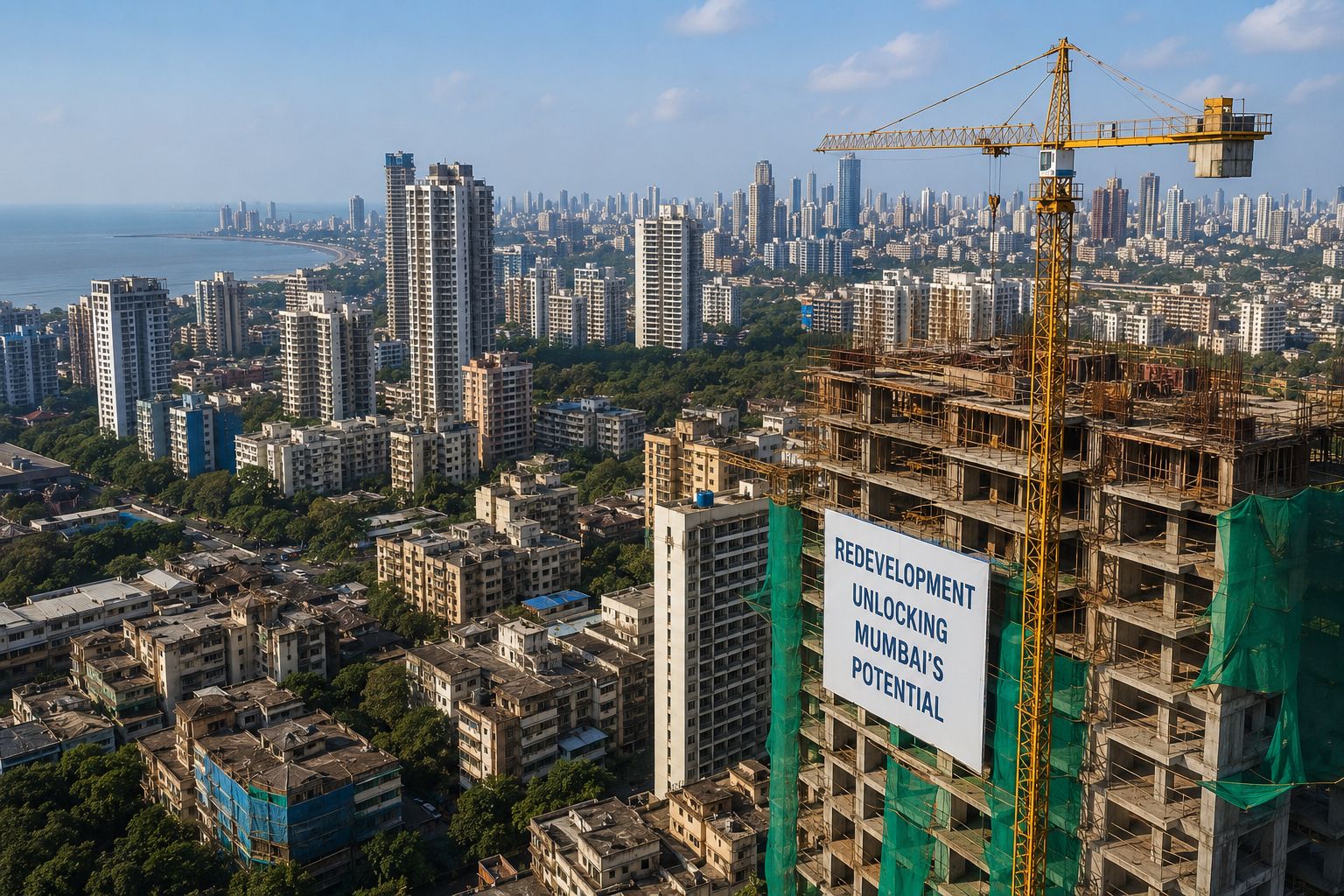
Future retail expansion is therefore increasingly tied to redevelopment projects, mixed-use developments and integrated townships.
As ageing commercial buildings undergo redevelopment, developers now have an opportunity to create retail environments that are far more relevant to today's brands.
Ground-floor retail in residential redevelopment projects is no longer just an additional revenue stream—it could become one of the project's most valuable components.
Similarly, mixed-use developments combining residential, offices, hotels and retail are likely to command stronger investor interest because they generate multiple demand drivers within the same ecosystem.
Mumbai's Leading Retail Destinations Could Become Even More Valuable
The supply-demand imbalance is expected to strengthen the position of Mumbai's established retail destinations, where organised brands already benefit from high footfall, strong connectivity and affluent catchment areas.
Premium malls such as Jio World Plaza (BKC), Phoenix Palladium (Lower Parel) and Phoenix Marketcity (Kurla)are likely to remain among the most sought-after destinations for luxury and international brands looking to establish a flagship presence in Mumbai. As vacancy levels tighten, these assets could witness stronger rental growth and increased competition for premium retail units.
Well-established suburban malls including Oberoi Mall (Goregaon East), Inorbit Mall (Malad), Infiniti Mall (Andheri West), Infiniti Mall (Malad West), R City Mall (Ghatkopar) and Growel's 101 Mall (Kandivali East)continue to attract a diverse mix of fashion, lifestyle, entertainment and food & beverage brands. Their strategic locations within densely populated residential catchments make them attractive destinations for retailers looking to expand beyond South Mumbai.
Retail assets such as Atria Mall (Worli), Link Square Mall (Bandra West), Dynamix Mall (Juhu–Vile Parle), Sky City Mall (Borivali East), Orchid City Centre (Mumbai Central), R Mall (Mulund), Raghuleela Mall (Kandivali)and Heera Panna Shopping Centre (Haji Ali) could also benefit as organised retail continues to expand and brands explore alternative high-performing locations.
Beyond shopping malls, Mumbai's premium high streets—including Linking Road, Hill Road, Colaba Causeway, Turner Road, Kemps Corner, Breach Candy and parts of Lower Parel—may experience renewed leasing activity as retailers compete for highly visible storefronts with established customer traffic.
For developers, investors and commercial property owners, this suggests that future value creation will not depend solely on building additional retail space. Instead, it will increasingly depend on owning or developing retail assets in locations where consumers already live, work and spend time. In an environment where demand is outpacing supply, well-positioned retail destinations are likely to command stronger rentals, higher occupancies and greater long-term capital appreciation.
The Rise of High Streets
The shortage of organised mall space may also revive India's premium high streets.
Locations such as Linking Road, Hill Road, Colaba Causeway, Kemps Corner, Turner Road and parts of Lower Parel have always attracted strong consumer traffic.
As mall vacancies tighten, many retailers may increasingly evaluate established high streets where visibility, accessibility and established footfall remain strong.
This creates opportunities not only for institutional developers but also for individual shop owners holding prime retail assets.
For decades, high-street properties were viewed primarily as legacy investments.
Today, they may once again become strategic commercial assets.
Developers May Change Their Priorities
Retail demand also has the potential to influence future project design.
Developers who previously focused predominantly on residential sales may begin allocating greater attention to integrated retail components.
Retail improves not only recurring rental income but also enhances the overall value of surrounding residential and office inventory.
A successful retail ecosystem increases footfall, creates community spaces and strengthens the long-term attractiveness of an entire development.
Over time, developers may compete less on apartment sizes and more on the quality of the lifestyle ecosystem surrounding them.
What It Means for Investors
Commercial investors should pay close attention to this transition.
Assets with long-term retail leasing potential may witness stronger capital appreciation than generic commercial inventory.
Stable rental income, lower vacancy risk and growing retailer demand improve the attractiveness of premium retail assets for institutional investors, REITs and family offices.
However, not every retail property will benefit equally.
Older shopping centres lacking modern layouts, experiential offerings and accessibility could continue facing pressure despite overall market growth.
The premium for quality is likely to widen further.
Is This Temporary or a Structural Shift?
The biggest question is whether today's supply shortage will disappear as developers build more malls.
The answer is not straightforward.
Large retail developments require years of planning, approvals, financing and construction.
Retail demand, meanwhile, can accelerate much faster.
Even if new supply enters the market over the next few years, India's expanding middle class, rising discretionary spending and continued brand expansion suggest demand may continue outpacing supply in prime micro-markets.
Rather than viewing the current leasing boom as a short-term cycle, it may represent the beginning of a structural rebalancing of India's organised retail sector.
The winners will not simply be developers building more retail space.
They will be those creating the right retail destinations in the right locations.
Expert View by Sandeep Sadh
The commercial real estate market is entering a phase where location quality will matter more than inventory volume. As retailers compete for premium destinations, developers who integrate retail thoughtfully within residential and mixed-use projects are likely to unlock stronger long-term value. In cities like Mumbai, where land availability remains limited, future retail growth will increasingly depend on redevelopment rather than large greenfield mall projects. The next decade is unlikely to be defined by who builds the most retail space, but by who builds the destinations where consumers genuinely want to spend time.