Tardeo OC Case Highlights Documentation Risk in Premium Resale Deals
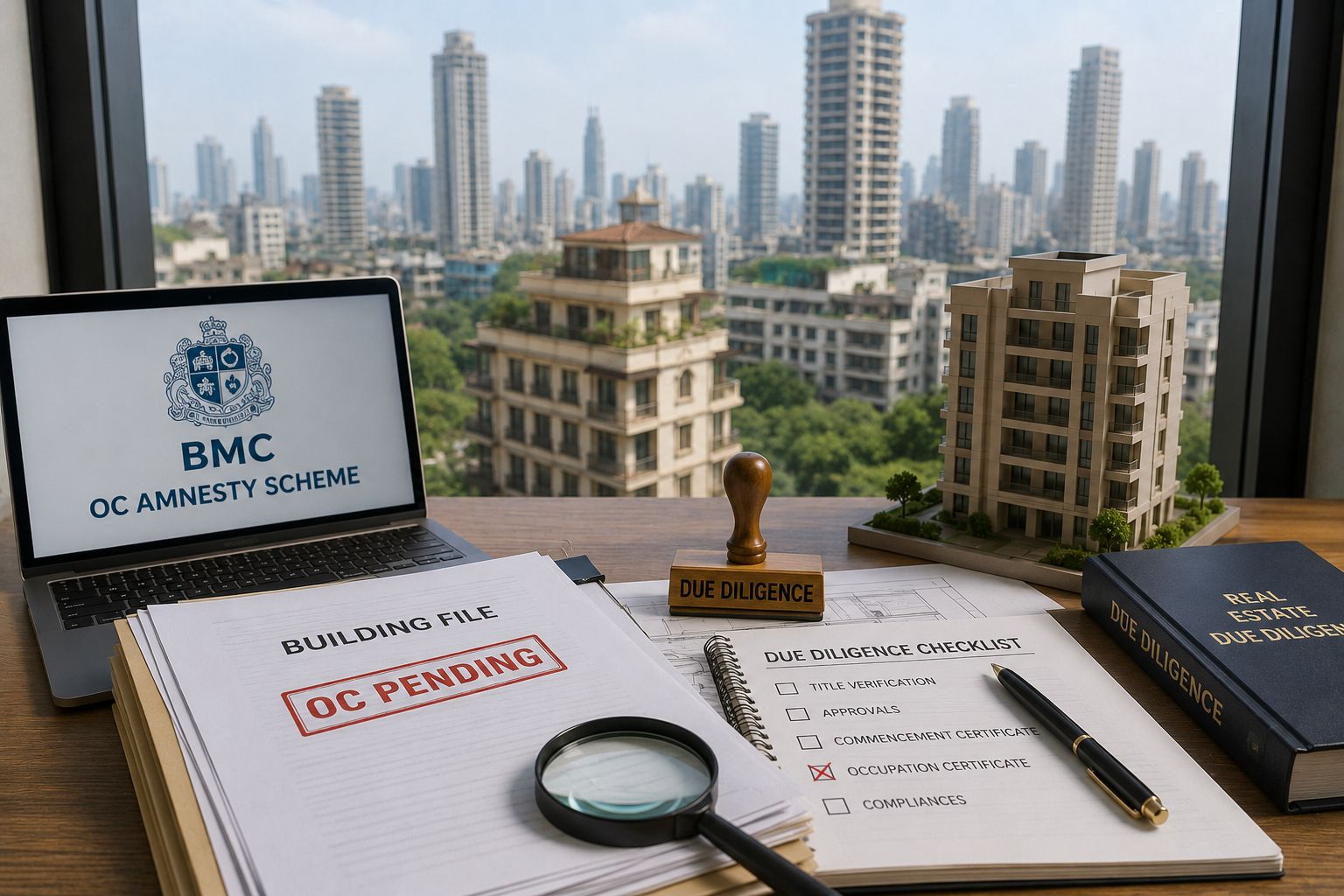
The BMC’s OC amnesty framework has renewed focus on a key issue for brokers and property professionals: the documentation risk attached to buildings without a formal Occupation Certificate.
Tardeo demonstrates why this matters even in premium locations. A high-value address or a well-known building does not remove the need to verify occupation status, approvals, structural compliance and the exact scope of any OC.
For brokers, the primary responsibility is clear communication. A policy route for regularisation should not be presented as a completed outcome. Until an eligible building receives the required approval, its transaction status and financing options may remain subject to limitations.
For developers and redevelopment teams, better documentation can make a significant difference. Once a building’s status is clarified, it may be easier to evaluate future redevelopment, member consent, title-related requirements and project feasibility.
The amnesty scheme can potentially help remove a long-standing obstacle, but it does not replace professional due diligence. Each building must be assessed independently, and buyers should be informed of the current document position before any negotiation advances.
The Tardeo development is therefore a useful market reminder: premium pricing does not reduce the importance of legal clarity. In fact, the value of a property often makes comprehensive documentation even more critical.
Related news
- The Imperial Residents In Tardeo Get Relief in Construction Dispute · 23 Aug 2026
- The Imperial Tardeo Construction Curbs Restored by Supreme Court · 23 Aug 2026
- Supreme Court Restores Construction Curbs at The Imperial Tardeo · 23 Aug 2026
- Mumbai ₹10 Crore Plus Home Sales Hit ₹18,512 Crore · 31 Jul 2026
- Mumbai Homes Above ₹10 Crore Rise 12% · 31 Jul 2026
- Tardeo OC Regularisation Move Offers Relief to Eligible Flat Owners · 11 Jul 2026